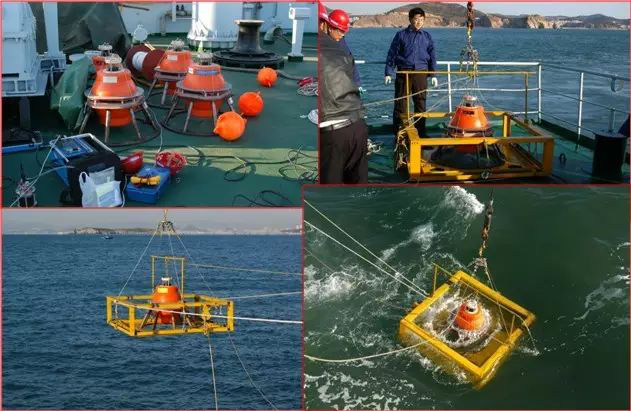
An Ocean Bottom Seismometer (OBS) is a seismometer designed to observe earthquakes and micro-vibrations caused by other crustal tectonic events on the seafloor. Compared with land seismometers, ocean bottom microseisms rise and decay more rapidly, with amplitude differences exceeding 20 times. Microseisms originate from the ocean and are proportional to wind and wave conditions. Such seismometers feature complex structures, large volume and high costs, and their deployment and recovery are relatively cumbersome. Deployment of ocean bottom seismometers enables observation of foreshocks and microseismic activities that are difficult to detect on land, facilitates understanding of regional differences in Earth’s structure, and serves as the most powerful tool for measuring seismic dynamics and characteristics near trenches and mid-ocean ridges.
These receivers must possess broadband response, wide dynamic range and high sampling rates, be capable of operating under low signal-to-noise ratio conditions, and achieve good coupling with the seafloor. Computers are adopted to conduct 3D tomographic inversion imaging on recorded body waves and surface waves using teleseismic travel-time residuals and local earthquake data to solve image recognition problems, which can generate pseudo-color images of seafloor stratigraphic structures. The spatial scale depends on array aperture, while accuracy is related to the number of array elements and array geometry.
Based on seafloor stratigraphic structures, the thickness of sedimentary layers, distribution of source rocks and trap conditions can be determined to evaluate oil and gas resources and guide further exploration. The technology can also be applied to analyze seafloor engineering geological conditions, identify unstable seafloor zones and prevent geological disasters.
Our company has developed pop-up short-period ocean bottom seismometers and pop-up broadband ocean bottom seismometers. In 2016, cable-type and buried ocean bottom seismometers adaptable to various seafloor seismic observation modes were developed to advance marine seismic observation technologies in China.
The figure below shows the field test of our company’s ocean bottom seismometers conducted in the South China Sea: