1 Urban Engineering Application in Shanghai
The South Yellow Sea Earthquake and Liyang Earthquake occurring near Shanghai in the 1990s once caused city-wide production and work suspension in Shanghai and brought huge economic losses. A series of accidents followed: the collapse of an under-construction residential building in Minhang in 2009, two collapses of metro projects under construction in 2011 and 2012, the deflagration in Shengying Chemical Workshop in 2013, the liquefied gas tank explosion in a residential building in Hongkou in 2014, and the truck rollover accident on the Middle Ring Road in 2016 which crushed the viaduct and caused a large number of concrete poles to fall from height. These incidents resulted in casualties and property losses and created destabilizing factors for urban development.
Urban development in Shanghai faces numerous hidden dangers, including sudden disaster accidents. These cover not only seismic hazards but also unexplained collapses of urban facilities (including high-rise buildings, bridges and tunnels), explosions triggered by underground natural gas pipeline leakage, chemical plant incidents, and so on.
Establishing a monitoring, alerting and prevention system for urban vibration disasters is a fundamental project to ensure stable urban development and enable citizens to live and work in peace and contentment. To dynamically monitor seismic activities in the city and adjacent areas, issue early warnings for destructive earthquakes, effectively reduce seismic losses, and rapidly provide post-earthquake seismic intensity rapid reporting and relevant seismic damage parameters, it is necessary to construct a rapid response system for seismic (vibration) disasters tailored to the specific conditions of each city.
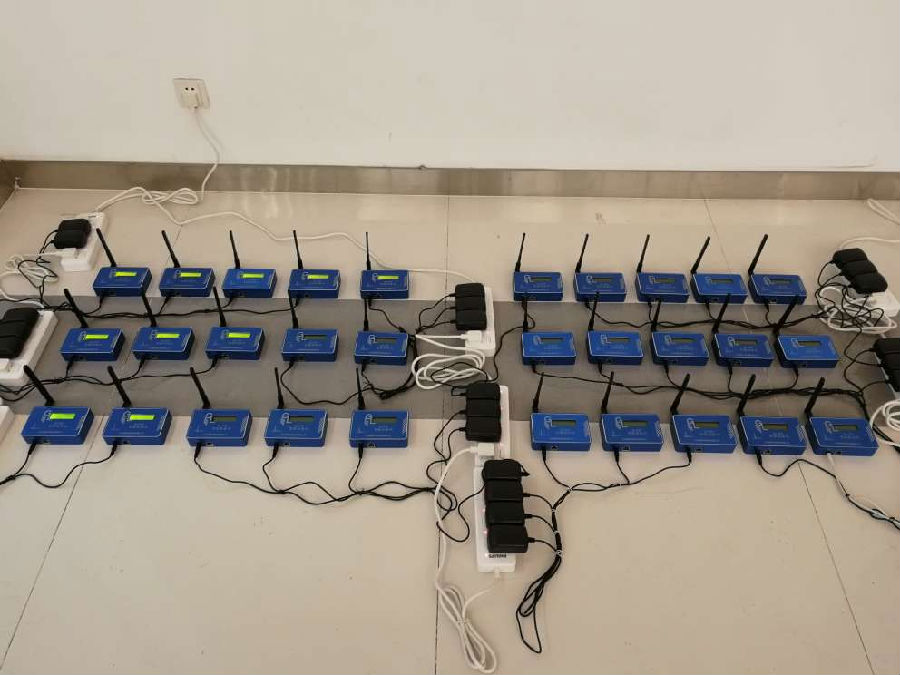
Tested Geolight Instruments and Equipment
2 Introduction to Functions of GL-EWT Earthquake Early Warning Terminal
The earthquake early warning and intensity rapid reporting information release terminal aims to maximize the social benefits of the earthquake early warning network and improve earthquake prevention and disaster reduction performance. It delivers early warning information timely to government authorities, industrial users, the public and other stakeholders through effective channels, and provides concise earthquake evacuation guidance according to their production, living conditions and geographic locations.
The terminal mainly realizes earthquake information reception and intensity verification, and supports additional functions including earthquake drill simulation and seismic science popularization.
Early Warning Information Reception Function: Receive information from the seismic network center. Based on magnitude, epicenter location and origin time, rapidly estimate the impact of the earthquake on protected targets. Information is displayed on screen with graded audio-visual alarms. Voice broadcast will announce the occurrence time, location, estimated intensity of the earthquake, and countdown of available evacuation lead time provided by the early warning.
Seismic Intensity Verification Function: Based on observation data from local intensity meters and seismometers, dynamically revise estimated results and trigger more accurate audio-visual alarms. Meanwhile, observation data are transmitted back to the seismic network center to improve the accuracy of spatial distribution estimation of seismic intensity. It provides reference for government departments to grasp disaster situations and rationally allocate rescue resources.
Earthquake Information Update Function: It supports real-time, effective and accurate information update; correction and explanation of false alarms and false triggers; and alarm clearance after seismic events.
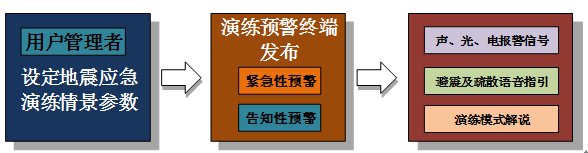
Earthquake Drill Function: Audio, visual and multimedia display of drill information under multiple modes, with clear indication that the alert is an earthquake drill. By adjusting seismic event parameters, the terminal can set various seismic scenarios and activate the drill warning release module for emergency exercises.
For example, by configuring basic parameters such as epicenter location, magnitude and intensity, scenarios of great earthquakes, moderate-strong earthquakes and felt earthquakes can be simulated to trigger drill alert distribution. Once the simulated seismic scenario is set, the drill alert release mode will start. Following simulated scenarios, drill alerts are issued in accordance with urgent warning and general notification protocols via the earthquake early warning terminal.
During drill alert release, voice prompts will specify the drill mode, and command and coordinate on-campus personnel for earthquake sheltering and emergency evacuation. Through emergency drills, personnel on campus can get familiar with the audio, visual forms and release mechanism of early warning information, master self-rescue and mutual-aid skills for sheltering and evacuation, and enhance overall social capacity for earthquake disaster mitigation.
Seismic Science Popularization Function: Combined with campus basic information, the service platform and terminals can carry out emergency drill demonstrations, emergency response strategy training and regular seismic knowledge education, implement seismic science outreach, and promote public education on earthquakes as well as mastery of earthquake evacuation and self-rescue skills.
Customized Earthquake Early Warning Information Service: According to the application demands of special users, various data and information products generated by the data processing system can be distributed via stable and reliable dedicated lines and dedicated data interfaces for direct access to the enterprise’s own train control system.
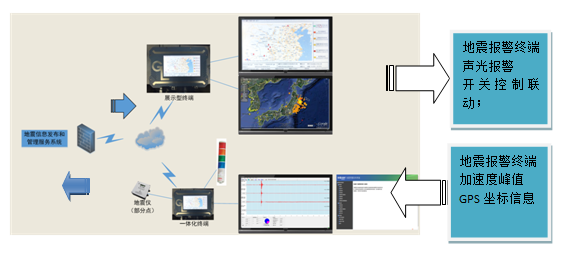
The system composition diagram is shown as follows.
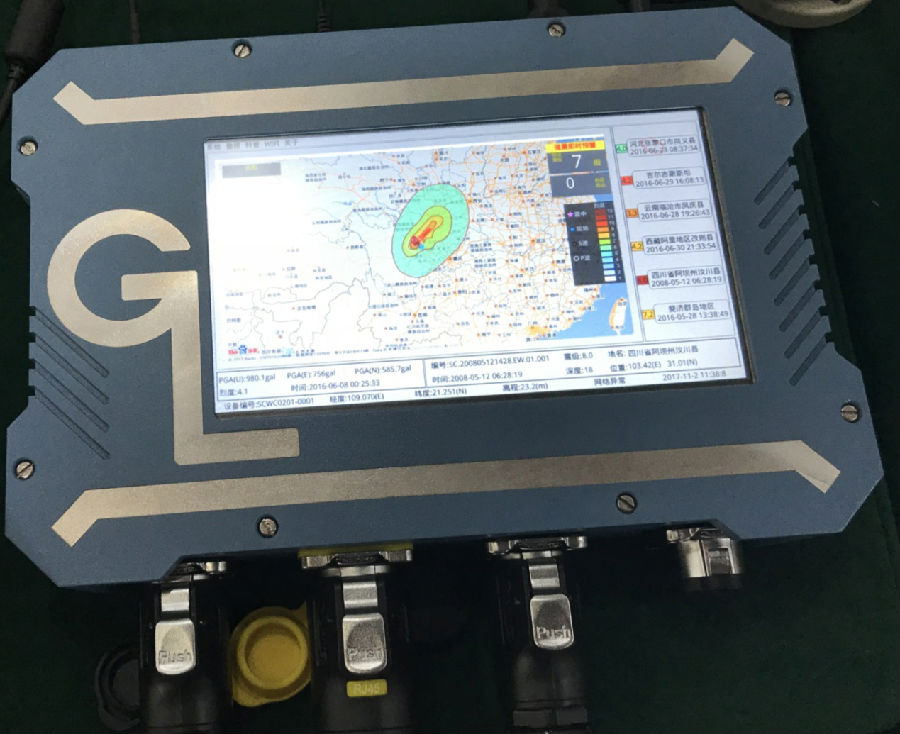
3 Appearance of Earthquake Early Warning Terminal Product
4 Scope of Application
Construction of Earthquake Intensity Rapid Reporting and Early Warning Network
Urban Engineering Earthquake Disaster Simulation and Assessment System