1 Application Background
Lifeline systems are vital urban infrastructure, generally referring to material, energy and information transmission systems including water supply, power supply, gas supply, transportation and communication. Repeated seismic disasters in recent years have demonstrated that earthquakes may inflict severe damage to lifeline systems. The consequences fall into three categories: physical damage, functional loss and economic loss (including direct and indirect economic losses). As a component of seismic damage prediction, economic loss analysis quantifies earthquake-induced economic impacts based on seismic hazard analysis, ground motion microzonation and ground failure microzonation. It relies on research into the damage and recovery of lifeline systems as well as the economic correlation between lifeline systems and end users.
Lifeline systems are highly susceptible to site failure and operate as interconnected networks. Hence, they are prone to disruption and functional outage once damaged. Losses triggered by lifeline failures differ from those of ordinary buildings and structures due to their systematic characteristics and critical importance. Comparatively speaking, indirect economic losses of lifeline systems caused by earthquakes have been insufficiently studied, mainly due to limited available data and difficulties in defining the affected scope. Therefore, monitoring of lifeline engineering brooks no delay.
2 Safety Monitoring of Lifeline Engineering (Vibration Control System for Low-Pressure Gas Pipelines)
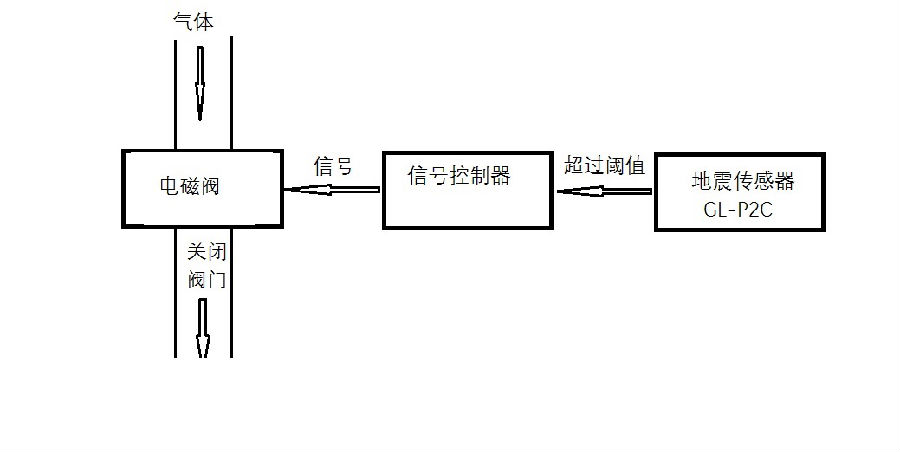
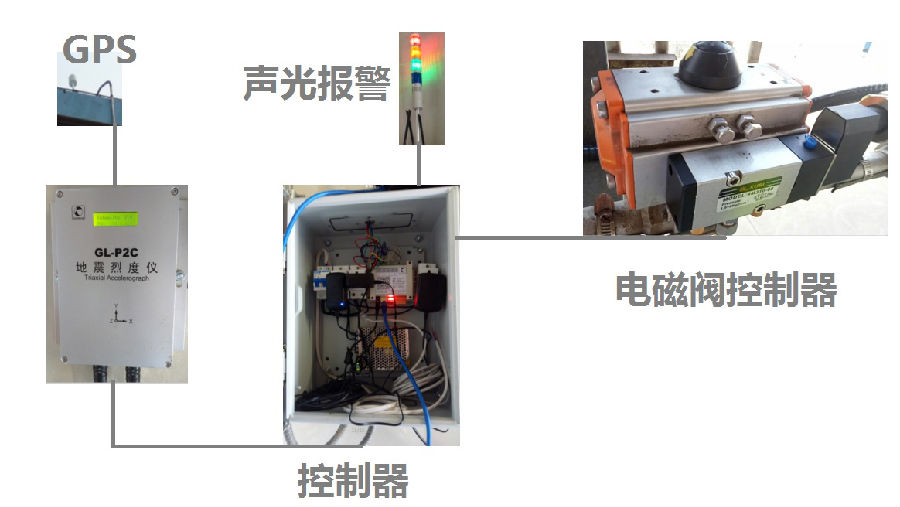
For a wholly-owned chip manufacturing enterprise, GL-P2C intensity meters and matching controllers are deployed in a case of seismic response control for hydrogen pipelines.
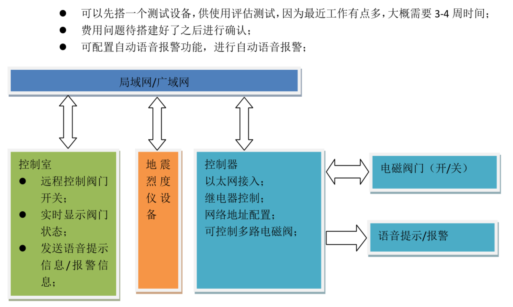
Schematic Diagram of Vibration Control System for Low-Pressure Gas Pipelines
3 On-site Instrument Application