1 Application Background
China lies between the Circum-Pacific Seismic Belt and the Eurasian Seismic Belt, featuring frequent, intense, shallow and widely distributed seismic activities. Over 50% of its land area falls within high seismic intensity zones of Grade VII and above. Earthquakes have occurred frequently in recent years. Following the M8.0 Wenchuan Earthquake in 2008, earthquakes of magnitude 6.7 or stronger successively struck Yushu in Qinghai, Kaohsiung in Taiwan, Hotan in Xinjiang and other regions.
During the construction of high-speed railways including Beijing–Tianjin Intercity Railway, Beijing–Shanghai High-Speed Railway and Harbin–Dalian High-Speed Railway, China developed seismic monitoring and alarm systems for high-speed railways. Nevertheless, such systems only support threshold-based alarming. The monitoring and alarm systems along individual lines operate independently without interconnection and information sharing. They are not connected to the national seismic network, leading to long latency for alarms and emergency response, and thus fail to fully satisfy the ultimate requirements of high-speed railway early warning.
To realize complete early warning capability, China considered introducing and localizing overseas high-speed rail seismic early warning systems in the initial stage of high-speed railway construction. However, China possesses extensively distributed seismic fault zones and a mature high-speed railway network. Meanwhile, high-speed railway equipment technologies differ from those adopted in Japan, France and other countries in terms of neutral section passing technology for catenary systems, train control systems, track circuit standards, etc. As a result, no off-the-shelf technology can meet domestic demands. It is urgent to develop a new-generation seismic early warning system adapted to the practical conditions of China’s high-speed railways.
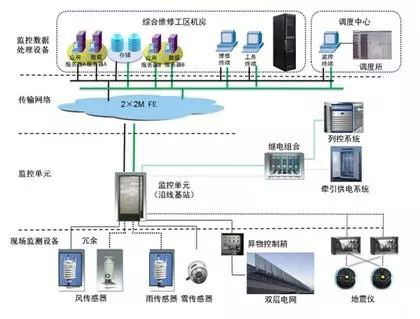
2 Schematic Diagram of High‑Speed Railway Early Warning System
3 Instrument Data Display in Participated Projects
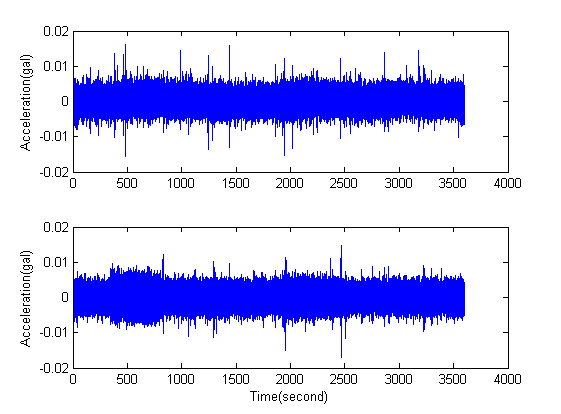
(1) Ambient Vibration Acceleration Time History
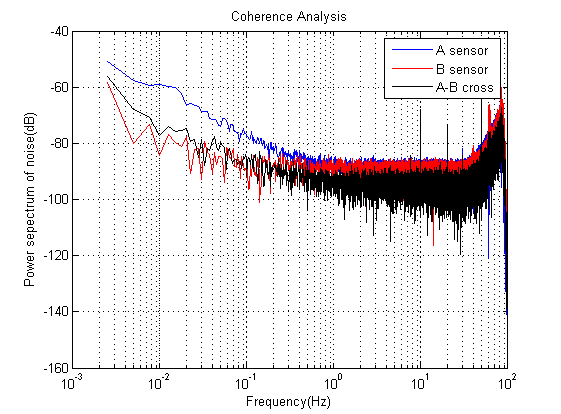
(2) Ambient Vibration Fourier Amplitude Spectrum
EDAS-24GN/BBAS-2 (Beijing Geolight) (EW Component)