From June 22 to 24, GEOLIGHT (Beijing) Technology Co., Ltd. held training for Station‑Specialized Equipment (Phase II) of the National Seismic Intensity Rapid Reporting and Early Warning Project in Qingdao, Shandong Province. More than 80 participants, including project‑relevant officials from the China Earthquake Networks Center, seismic bureaus of all provinces and municipalities, as well as GEOLIGHT staff, attended the training.
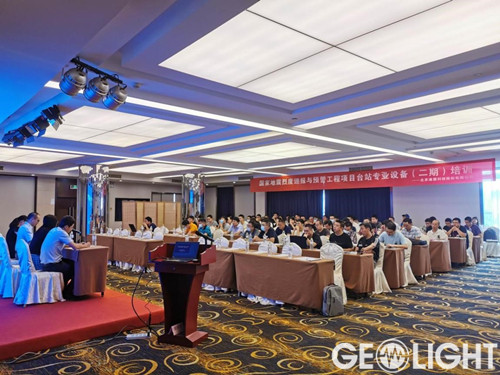
Training Venue for Station‑Specialized Equipment (Phase II) of the National Seismic Intensity Rapid Reporting and Early Warning Project
Zhou Yinxing, Manager of the Marketing & Service Department of GEOLIGHT, presented a report on the latest advances in the company’s seismic‑observation technologies in recent years, and briefly introduced the production, quality inspection, supply and after‑sales service of specialized equipment for the national early‑warning project. Wu Weiyuan, Deputy Manager of the Marketing & Service Department, delivered comprehensive technical training covering every procedure: working principles of seismic data collectors and down‑hole broadband seismometers GL‑CS60B/CS120B, precautions for equipment installation, operation and maintenance, equipment software operation, as well as subsequent data acquisition, playback and transmission. Li Lijuan, R&D Engineer of the Seismometer Department, elaborated on the internal structure, principles, operation and maintenance of the new UVW‑configured broadband seismometers GL‑CS60/120 widely deployed in the early‑warning project, and highlighted precautions under different installation environments. Experts from provincial seismic bureaus took an active part in the training, summarized and exchanged problems encountered in practical application. The training concluded with full success!
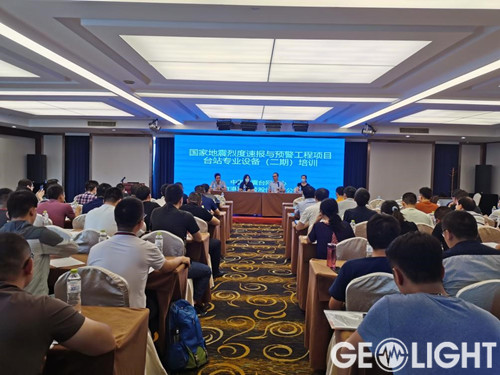
On‑site Training Delivered by GEOLIGHT Technicians
During the training, GEOLIGHT exhibited a series of newly‑developed seismic‑observation instruments to experts from various bureaus, including newly‑promoted short‑period seismometers for surface, shallow‑well and deep‑well deployment, broadband seismometers and strong‑motion accelerometers. In‑depth discussions were carried out with industry experts and scholars to collect end‑user experience and practical requirements from front‑line researchers. This lays a solid foundation for monitoring‑station operation‑and‑maintenance management, data processing, tracking‑and‑analysis, as well as the follow‑up implementation and maintenance of the National Seismic Intensity Rapid Reporting and Early Warning Project.
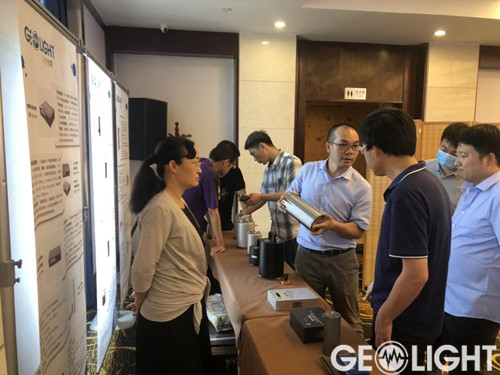
Introducing New‑developed Products to Attending Experts
GEOLIGHT has long been devoted to R&D of seismic‑observation technologies, fully supporting the construction of the National Seismic Intensity Rapid Reporting and Early Warning Project, and providing solid support for disaster prevention & mitigation, emergency command and post‑earthquake rapid rescue. Station‑specialized equipment independently researched‑and‑developed and manufactured by GEOLIGHT for the project are listed below:
1. EDAS‑24GN3/6 (EEW) Seismic Data Collector
The EDAS‑24GN series is a seismic‑data acquisition‑and‑recording server featuring high resolution, large dynamic range and low‑latency real‑time data streams, suitable for seismic observation stations, earthquake early‑warning stations and comprehensive seismic observation stations. It converts multi‑channel analog voltage and frequency inputs into digital outputs, and supports data acquisition, recording, network and serial‑port data transmission as well as large‑capacity data storage. It features compact size, light weight and low power consumption.
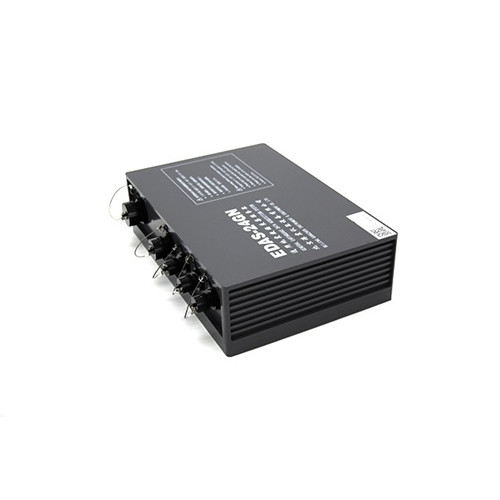
EDAS‑24GN3/6 (EEW) Seismic Data Collector
2. GL‑CS60/120(EEW) Broadband Seismometer
GL‑CS60/120 is a compact, low‑power‑consumption, high‑performance integrated three‑component broadband seismometer newly developed and manufactured by GEOLIGHT. It consists of three identical tilted suspension pendulums evenly arranged along the circumference, with built‑in force‑balance electronic feedback circuit, coordinate transformation circuit and control circuit. Key features:
(1) Operating environment: temperature −35 ℃ ~ 55 ℃, relative humidity 0‑98%;
(2) Low power consumption: operating power consumption less than 0.7 W;
(3) Superior performance: self‑noise below NLNM within 100 s ~ 15 Hz;
(4) Easy installation: dual directional pointers guarantee orientation accuracy; automatic pendulum release and zero adjustment upon power‑on; automatic pendulum locking upon power‑off. Equipped with automatic zero‑position monitoring, it performs auto zero‑calibration when pendulum deviation becomes excessive during long‑term observation to ensure normal operation.
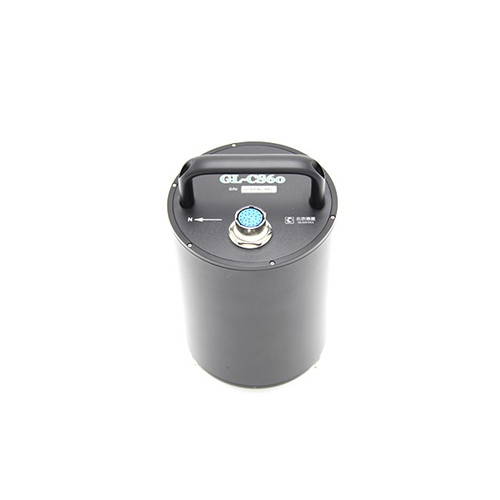
GL‑CS60/120(EEW) Broadband Seismometer
3. GL‑CS60B/120B Down‑hole Broadband Seismometer
GL‑CS60B/120B is a new small‑bore down‑hole seismometer independently developed by GEOLIGHT. It measures 80 mm in diameter and 720 mm in height. Adopting three‑component UVW symmetric suspension structure, its nominal differential‑output sensitivity reaches 2000±20 (Vs/m). As a broadband, high‑sensitivity, large‑dynamic‑range seismometer with highly stable transfer function, it comes with accessories such as sealed cylinder and base. Featuring rational structure, precise positioning and stable performance, it fits down‑hole broadband seismic observation. Built‑in calibration coils and circuits support remote calibration. Housed in an individual stainless‑steel sealed cylinder for good sealing performance, it adopts watertight cables for repeated lowering and lifting in wells.
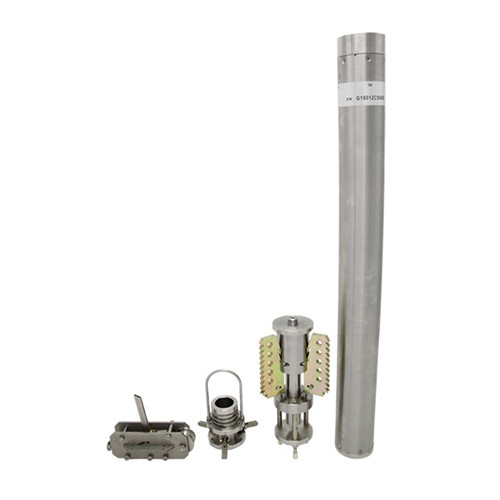
GL‑CS60B/120B Down‑hole Broadband Seismometer
Upholding the service tenet of “Quality First, Strive for Perfection”, GEOLIGHT enforces strict quality control and batch burn‑in tests for quality verification during mass‑production of above‑mentioned equipment. During burn‑in and joint commissioning, quality inspection and system joint debugging were performed in strict compliance with requirements from the project owner — the China Earthquake Networks Center. The company also supported on‑site inspections by experts from the Center to jointly secure quality of supplied equipment for the national project.
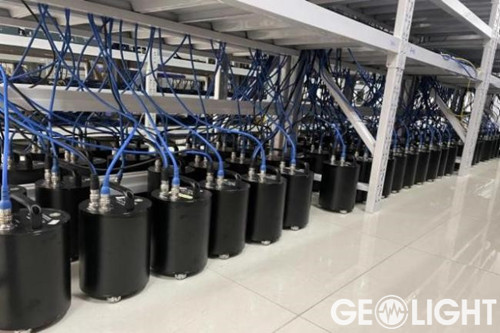
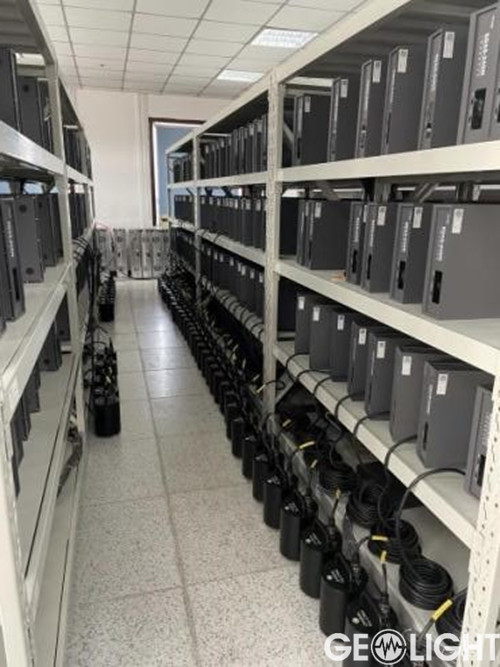
Batch Burn‑in Test of Specialized Equipment
In the course of project implementation, the expert group conducted multiple power‑off and network‑disconnection tests on joint‑commissioned and sampled devices at the burn‑in site, confirming that data‑access performance meets requirements. Inspectors affixed burn‑in‑qualified labels to each unit on‑site, and randomly selected qualified devices for third‑party sampling inspection. Shipment and hand‑over are permitted only after passing third‑party tests.
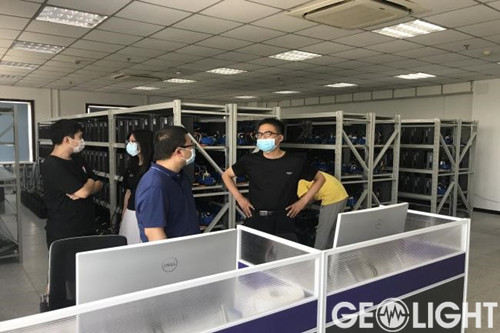
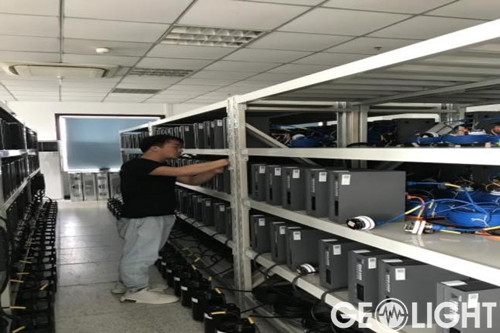
Sampling Inspection on Burn‑in‑tested Equipment by Experts from China Earthquake Networks Center
Throughout equipment training and hand‑over, experts from the China Earthquake Networks Center and GEOLIGHT technicians held in‑depth exchanges and put forward requirements for subsequent equipment supply, after‑sales service and follow‑up training, providing solid guarantee for smooth progress of subsequent construction of the national earthquake early‑warning project.