From December 27 to 30, 2024, the Symposium on New Technologies and Applications for Crust‑Mantle Structure Detection Using Dense Seismic Arrays and the 7th Dense Array Academic Conference was grandly held at Yunnan University. Co‑hosted by multiple academic societies, research institutes and universities, the conference brought together 227 experts and scholars from 69 universities, research institutes and seismic institutions at home and abroad for in‑depth discussions on technological innovation and multi‑scenario applications of dense seismic arrays. As an exhibitor, Geolight participated in the event to conduct technical exchanges with industry experts and researchers, and presented complete hardware equipment and solutions for dense array observations.
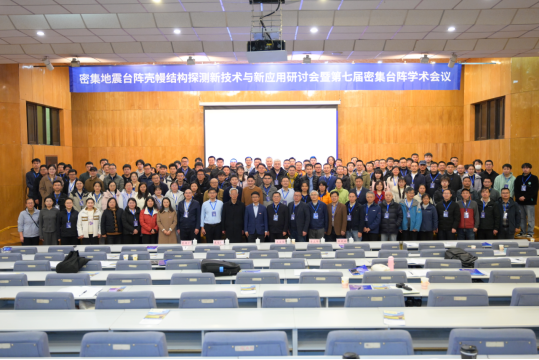
The conference featured invited presentations, thematic reports and poster sessions covering cutting‑edge topics of dense seismic arrays. Research topics included scientific investigations of the Antarctic Ice Sheet, Qinghai‑Tibet Plateau rifts, metallogenic belts and faulted basins, as well as engineering applications such as desert near‑surface monitoring, landslide monitoring and shale‑gas production monitoring. Lively discussions were carried out on new technologies including ambient noise tomography, joint seismo‑electric inversion, distributed fiber‑optic observation and 4‑D velocity tomography. Twenty‑six poster presentations showcased the latest domestic research achievements in dense seismic arrays, facilitating end‑to‑end technical exchanges spanning data acquisition, processing and imaging interpretation. Dense‑array observation imposes stringent requirements on instrument portability, dynamic range, low‑power consumption, time synchronization and stable acquisition of massive datasets. High‑performance observation hardware serves as the cornerstone for fine crust‑mantle detection and near‑surface engineering monitoring.
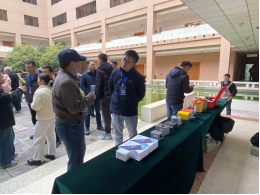
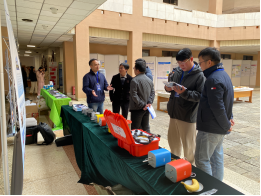
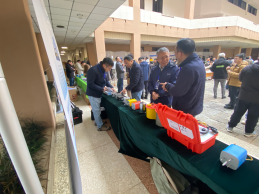
At the exhibition booth, Geolight highlighted core products optimized for large‑scale mobile dense array deployment, including integrated seismometers, nodal seismometers and remote‑zeroing accelerometers. Characterized by low power consumption, easy deployment and high dynamic range, these instruments are suitable for large‑scale field station layout. They support various scientific projects such as deep crust‑mantle structure detection, ambient noise tomography, landslide hazard monitoring, mine and oil‑gas development monitoring, and satisfy both long‑term observation of permanent stations and rapid deployment of field mobile arrays.
During the conference, Geolight’s team had extensive communications with attending experts and front‑line researchers regarding field deployment of dense arrays, massive waveform data acquisition, equipment stability under harsh conditions, and the evolution of next‑generation array instruments. The team collected practical feedback from end‑users operating in challenging sites such as the Qinghai‑Tibet Plateau, complex mountainous regions and deserts, and exchanged views on future technical directions including distributed observation, all‑in‑one stations and multi‑parameter joint observation.
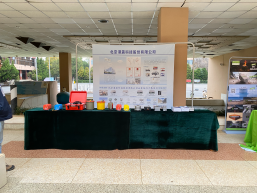
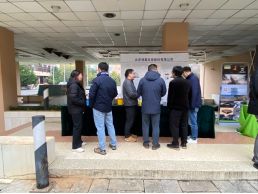
For more than 30 years, Geolight has specialized in the R&D and manufacturing of seismic observation equipment, establishing a full‑range product portfolio covering sensors, acquisition hardware and supporting software. Its products are widely deployed in natural earthquake observation, deep crust‑mantle exploration, geological hazard monitoring and reservoir‑induced seismic monitoring. Geolight has provided hardware support for numerous major domestic mobile‑array scientific projects and actively participated in the formulation of industrial standards and new technical frameworks.
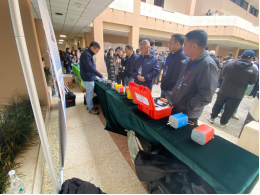
Dense seismic arrays constitute a critical technical approach for understanding continental crust‑mantle evolution, interpreting seismogenic structures and conducting geological hazard monitoring. Rooted in real‑world research requirements, Geolight will continue to promote industry‑university‑research collaboration, improve the performance of dense‑array observation instruments, and tackle technical challenges for observations in complex environments. With reliable domestic instruments, Geolight will advance China’s crust‑mantle structure detection and deep geophysical research, and contribute hardware capabilities to earthquake prevention & mitigation and geoscience development.